

The Screen as a Campfire
What do you call the activity of paying attention to a story? Is it a TV show if it’s being watched on a phone? The idea of consuming narrative entertainment – without the vocabulary of physical delivery – is hard to describe.
Narratives have purpose and intention, but are identified and selected through their containing structures and systems.
In today’s technological landscape, narrative entertainment is nearly universally available on demand. There’s no need to adjust your antennae and find a seat for primetime – it doesn’t demand a place.
A recent Kim University study explored narrative entertainment habits across media and platforms. The study revealed that stories function not as events but as atmosphere.
A Different Kind of Engagement
Changing social and workplace norms have allowed narrative entertainment to become a part of the room. “It’s on in the background all day” is a much more common thing to hear now that we can stream from the same devices we use to communicate, work, and learn.
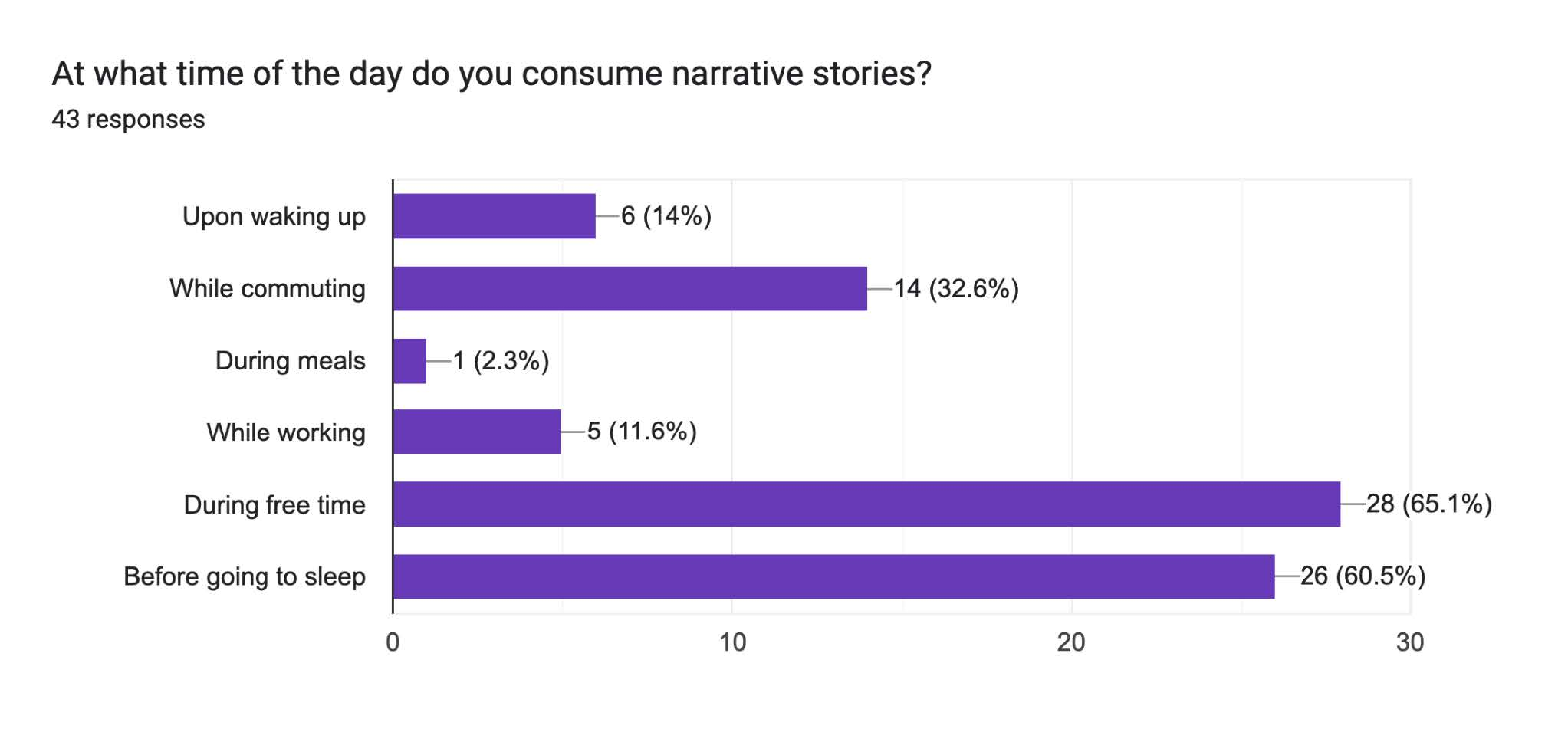
55% of respondents identify more than one time of day at which they are engaged in narratives, including commute time, upon waking, and while working. While “free time” was identified most frequently, “before going to sleep” was a very close second.
A young teacher from New Jersey commented on his nightly ritual, “I like to rewatch sitcoms as I fall asleep. I think of it like being a little kid and having a story read to me that I have heard a thousand times before.”
A woman from New York reported that “things are on in the background most times (kind of all day), but in the evening and night time, especially when I have trouble sleeping, stories are a comfort and a means to relax.”
Nostalgia and mood were cited as prompts to begin engagement and revisit titles. People are using narrative for emotional regulation. While we cite scrolling and screen time as obstacles to quality sleep, it seems that stories (sometimes delivered through screens) are a very popular tool for settling into rest.
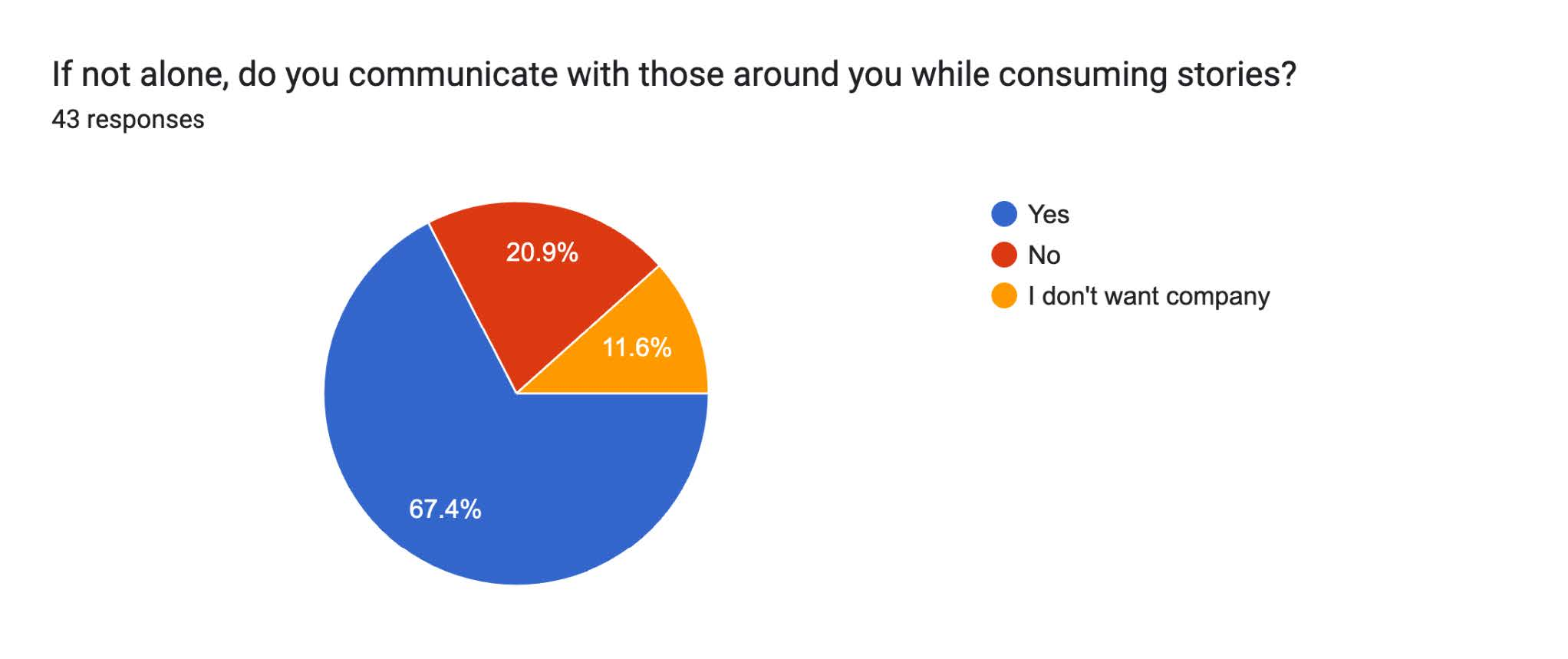
The inverse application proved true as well. Stories facilitate and complement social interaction. 70% of respondents reported consuming narrative entertainment in the company of others. 68% actively socialize while watching videos.
Respondents commented on atmospheric narratives:
“Oh, yeah, there’s always something on in the background [when I’m with friends]. But that’s not the…the tv is the campfire. Right? It’s there and it’s what you’re kind of doing, but it’s not really the focus. It’s the campfire.”
“When other people are around, I will focus on something more and discuss it.”
“They watch and scroll on their phone, or talk to people, or do something with their hands. I know I am guilty of it. Often it seems like whatever is on just becomes background noise instead of the focus.”
Multi-tasking is usually cast in a negative light, but it may be that we are not disengaged from this background noise, we are choosing to coexist with it. This different kind of engagement is an unexpectedly wholesome addition to the discussion of contemporary media – one that reminds us of the power of communal narrative and shared stories.
When Platforms Kill the Vibe
So, what happens when the campfire creates tension?
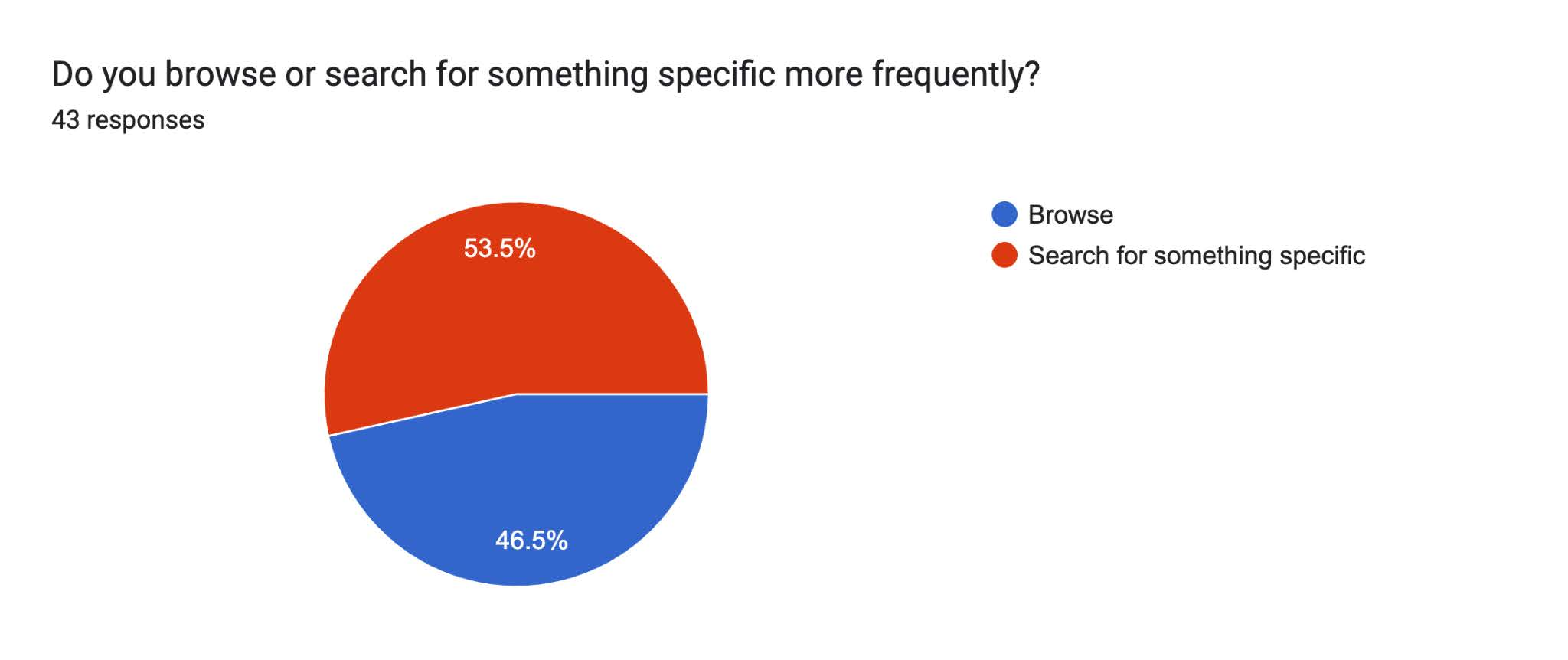
Further findings from the KU survey indicate that users don’t feel guided by their platform experiences. Only 34.9% of respondents reported regular use of self-curation options and 53.3% use manual search more frequently than browsing. There was substantial anecdotal evidence that people find in-platform recommendations inaccurate.
It’s undeniable that contemporary media offers an unimaginable breadth of content. Both personal responses to the KU survey and the rise of the reboot describe a strange consequence of this abundance. When faced with choosing anything in the world, people will choose what they know. A preference for manual search is a preference for the familiar, the expected. Platforms assume that people want discovery and design interfaces to deliver an endless
selection – they present changing faces to deliver content that users seek for emotional regulation.
When platforms optimize for novelty, attention, and throughput, they interrupt rather than stabilize. Missing this new evolution of narrative as an environment changes the emotional function of content and competes with their users’ most personal journeys.
Redefining the Purpose of Media Delivery
When engagement is less about attention and focus and more about presence and consistency, it reframes what it means to “watch” something. The availability and immediacy of narrative content delivery creates tension with this idea, but it also presents a lot of possibilities.
Is there a solution for narrative delivering entertainment that hasn’t been developed yet? Is there a form of narrative that will evolve to fill this space? What does it mean to live alongside stories, rather than pausing life to focus on them?
When presented with endless options, people don’t rely on what flashes the brightest, but what keeps them warm and well in times of darkness.
This article is based on research regarding the consumption of narrative entertainment.
Categories